Located in the west of Ireland, Galway is a seaside city full of artistic atmosphere and historical accumulation. It is famous for its medieval streets, vibrant pubs and a cultural atmosphere that blends tradition and modernity.
As one of the most popular tourist cities in Ireland, Galway not only attracts countless travelers to stop, but also gradually becomes a destination in the hearts of self-driving tourists and in-depth travel enthusiasts. However, if you want to truly explore the charm of this city and go deep into its streets, ports and cultural hotspots, a reasonable and efficient urban transportation plan is essential.
Ⅰ. Overall overview of urban transportation: a compact and orderly transportation system
Galway’s urban area is relatively compact, with Eyre Square as the core area, and several residential areas and business districts extending around it. Urban planning adheres to the principle of small and beautiful, and the main roads are connected by short distances, which is suitable for walking or short-distance transportation to reach various important locations. The peak traffic in the city is concentrated in the morning and evening commuting hours, but the overall traffic situation is much better than that of large cities such as Dublin.
Galway’s transportation structure can be divided into the following categories:
Public bus system (city bus)
Taxi service (traditional taxi and taxi app)
Pedestrian system (pedestrian streets, riverside trails, historical districts)
Bicycles and short-term rental electric scooters (gradually promoted, but currently not widely covered)
Ⅱ. City bus: the main commuter with affordable prices and reasonable coverage
1. Operating companies and route coverage
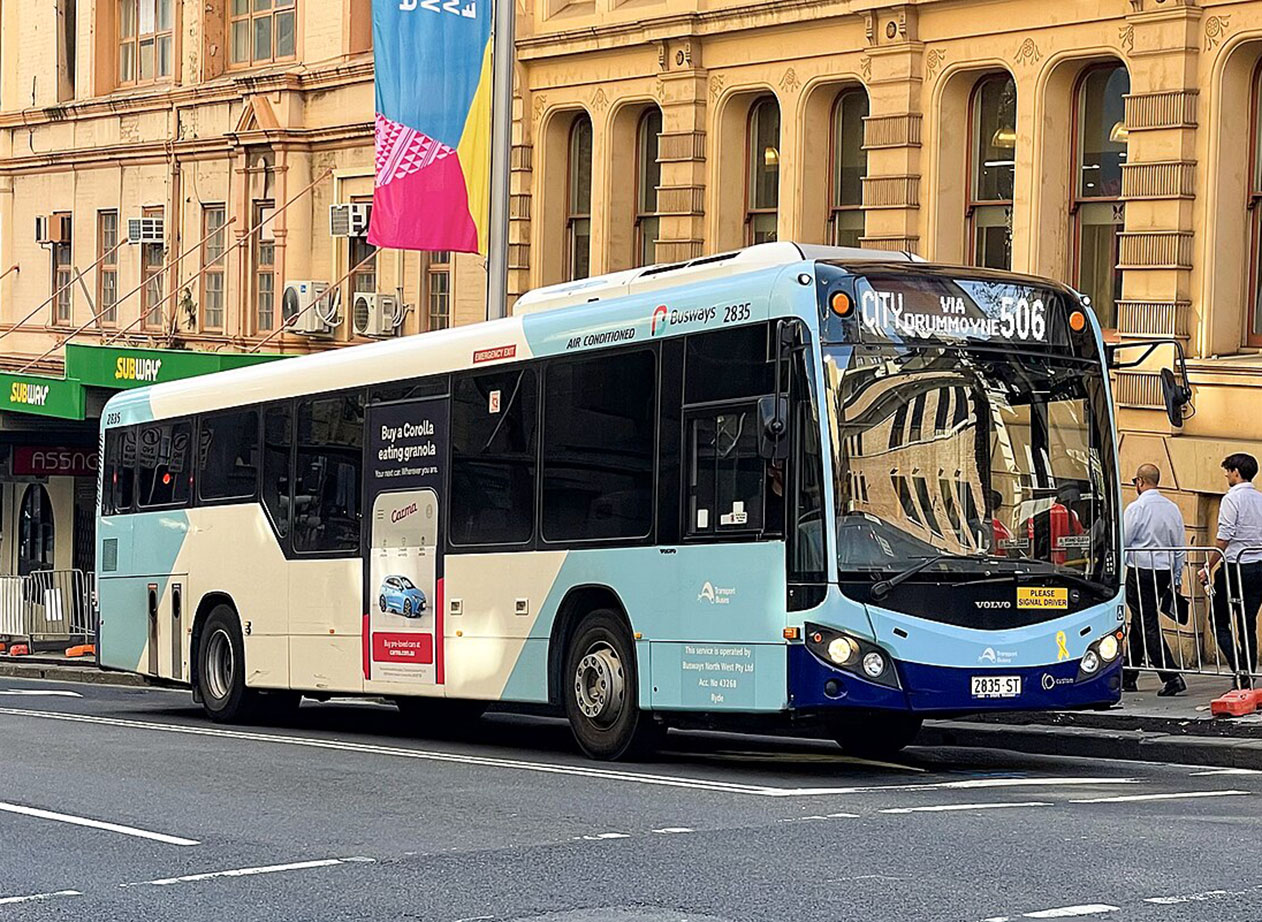
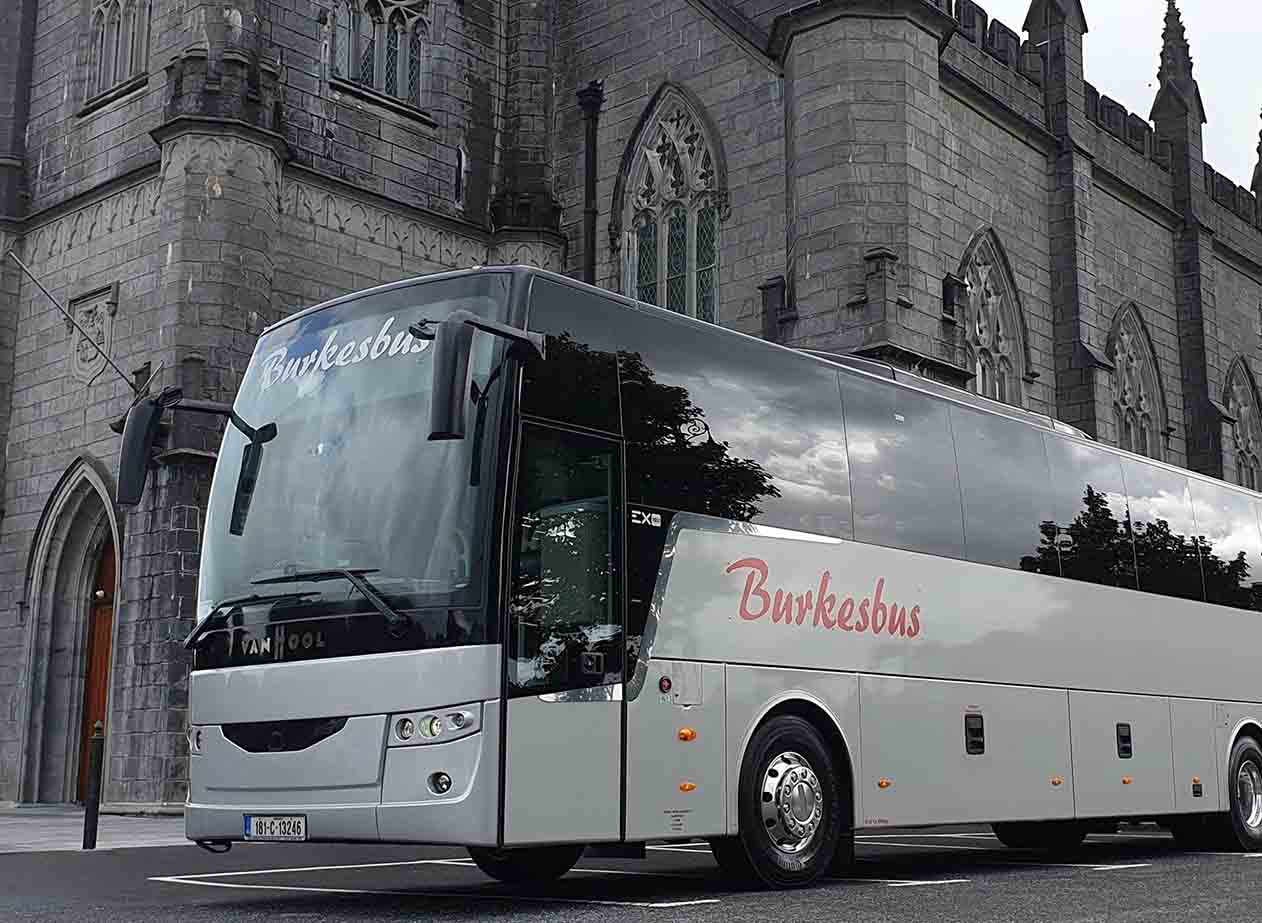
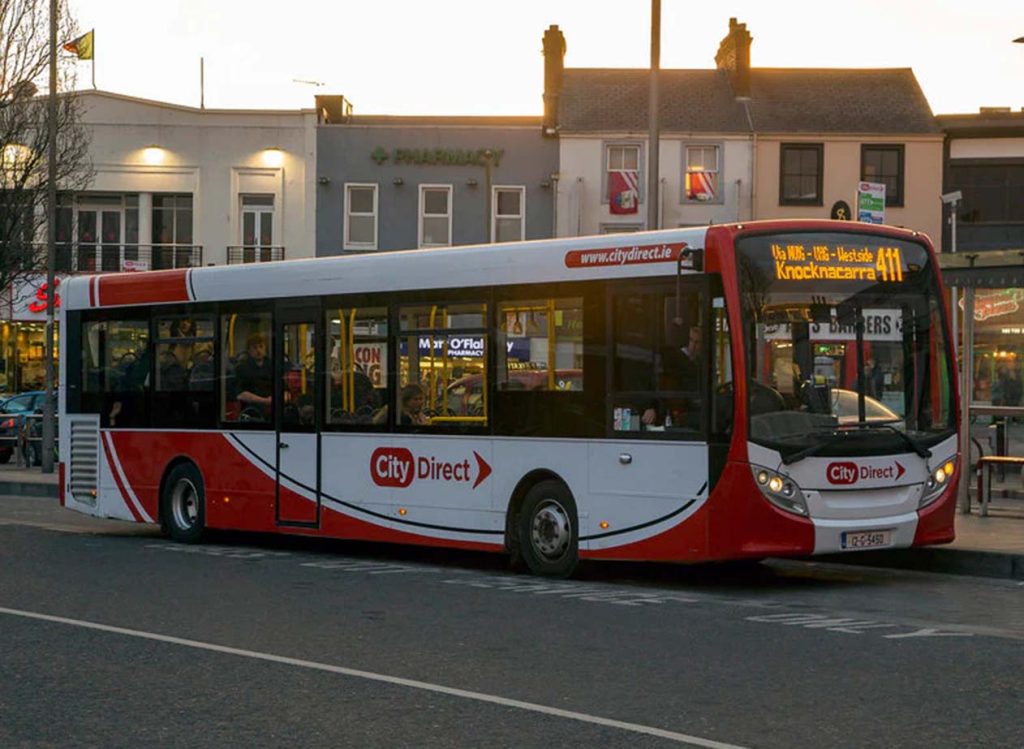
Galway’s bus service is mainly operated by Bus Éireann, a state-owned bus company that provides services within and outside the city. City buses are mostly presented in the “4XX” series number, such as 404, 405, 409, etc., connecting Eyre Square with the university area, Salthill, Westside and other living and tourist areas. Some buses also extend to the suburbs, covering satellite residential areas such as Oranmore and Knocknacarra.
Bus stops are densely distributed, especially in the Eyre Square area, with buses running every 5 to 10 minutes, which greatly facilitates travelers to museums, docks, universities and major business districts.
2. Frequency and operating hours
The city bus runs more frequently on weekdays. Major routes such as 404 and 409 run every 10 minutes during peak hours and every 15 to 20 minutes during normal hours. Most routes start operating at 6:30 in the morning and end at 11:30 in the evening; the frequency of buses on weekends and holidays is slightly reduced, but basic coverage is still maintained.
It should be noted that on Sundays and public holidays, early buses mostly start operating after 9 o’clock, which is not suitable for passengers who need to get up early to catch their trip.
3. Fare structure and payment method
The one-way fare depends on the distance, and the common fare range in the city is 1.80 to 2.50 euros. You can use cash (no change) or payment cards to buy tickets on the bus, or you can buy Leap Card in advance. This rechargeable card can be used in most cities across the country and enjoy a discount of about 20%.
Leap Card is suitable for travelers who stay for a long time or plan to take public transportation frequently. It saves money and the trouble of getting change every time.
4. Advantages and Disadvantages
Advantages:
Low price, suitable for travelers with limited budget;
Wide coverage of stations, connecting major attractions and accommodation areas;
Leap Card has obvious discounts and is easy to use.
Disadvantages:
Insufficient night flights, and alternative options need to be considered for late return;
Congestion is prone to peak hours, and delays are more common;
A few routes have long intervals, so you need to check the table and plan in advance.
III. Taxi service: flexible and convenient personalized travel plan
1. Overview of traditional taxis
Galway city has a number of traditional taxis with complete operating qualifications, mostly concentrated in Eyre Square, the railway station and the main hotel to set up waiting points. Most taxis are four-seater models, the vehicles are clean and tidy, and the drivers are mostly locals who are familiar with geography and history and have no communication barriers.
The starting price is 4.20 euros, and then it is charged by kilometer, with an average of 1.10 to 1.30 euros per kilometer, and there is an increase at night and on holidays. Generally speaking, it costs about 8 to 12 euros to go from the city center to Salthill Seaside or the university area, depending on the itinerary and traffic conditions.
2. The rise of taxi apps
With the popularization of digital travel, taxi apps are gradually becoming popular in Galway. At present, mainstream applications such as Free Now and Bolt provide smart taxi services. Reserving a car through a mobile phone can avoid the embarrassment of waiting on the roadside during peak hours. After booking, the driver’s information is transparent, the cost estimate is clear, and credit cards and online payments are supported.
The price of software taxis is the same as that of traditional taxis. You can also choose the car model and driver rating, which is suitable for travelers who have high requirements for travel comfort.
3. Pick-up and drop-off services and chartering
For multiple people or family travel, you can consider chartering services. Make an appointment with the taxi company for a full-day or half-day trip in advance. The price is negotiated according to the route, which is very flexible. For example, starting from the city center, along the coastline to the Cliffs of Moher and then returning, the regular price is 150 to 200 euros, depending on the number of people and the condition of the car.
4. Analysis of advantages and disadvantages
Advantages:
Flexible and efficient, suitable for time-sensitive or night travel;
You can go directly to any destination without transfer;
You can estimate the cost and travel time through the APP.
Disadvantages:
The cost is high and not suitable for frequent use;
It may be difficult to call a taxi during peak hours;
Occasionally there will be refusal or detours, so you need to pay attention to the itinerary.
IV. Walking: The preferred way to immersively explore Galway
1. Urban structure and pedestrian friendliness
The most suitable feature of Galway city for walking is its compact and diverse layout. The core attractions such as Spanish Arch, Galway Cathedral, Shop Street, etc. are no more than 15 minutes’ walk from each other. Walking among them, you can appreciate the architectural style and feel the enthusiasm of street performers.
There are many pedestrian streets in the city, especially along the Corrib River and the Salthill coastline, which are equipped with well-developed pedestrian paths and rest areas, suitable for strolling, photography and morning jogging.
2. Recommended hiking routes
Cultural exploration route: Starting from Eyre Square, walk along William Street and Shop Street to the Spanish Arch to experience street music and coffee culture;
Riverside leisure route: Walk along the Corrib River to University College Galway, and then to the Cathedral, with lush greenery along the way;
Coastal viewing route: Starting from the City Centre to Salthill Promenade, passing through the estuary and the coast, the whole journey has a broad view.
3. Walking safety and suggestions
Galway has good security conditions and is suitable for single or family hiking. At night, except for some remote blocks, most areas are well lit and have active traffic. It is recommended to wear comfortable shoes, especially in areas with more cobblestone roads, to prevent slipping.
Spring and autumn are suitable for hiking, with mild climates. It is recommended to carry a windproof jacket with you to cope with sudden weather changes.
4. Advantages and Disadvantages Analysis
Advantages:
Free and cost-free, the most environmentally friendly way;
You can deeply experience the city culture and daily atmosphere;
Suitable for slow travelers, taking photos and experiencing food.
Disadvantages:
It is inconvenient to reach the distant places;
The experience is reduced when the weather is bad;
People with a lot of luggage or limited physical strength are not suitable for long-term walking.
V. Multi-mode combination strategy: creating an efficient travel plan
1. Daily scenic spot tours: public transportation + walking
Suitable for travelers with limited budgets and wide itineraries. Using public transportation to quickly reach distant areas such as Salthill, and then walking to explore the attractions and alley cafes along the way after arrival, is a very cost-effective way of travel.
2. Night travel or in a hurry: taxi priority
Suitable for late return or early flights, trains, etc., taxi service is efficient and safe. You can also make an appointment in advance through taxi apps during specific time periods to avoid queuing or waiting.
3. In-depth cultural experience: pure walking mode
Suitable for in-depth travel enthusiasts, by exploring Shop Street, the riverside and the Spanish Arch on foot, experience the pulse of the city in a slow pace, especially suitable for photography, food and cultural check-ins.
4. Family and elderly travel: reasonable combination of public transportation + taxi
When traveling in a family group or with the elderly, you can choose public transportation as the basic commuting method, combined with taxis in transit or bad weather conditions to supplement flexibility and improve the overall travel comfort.
Choosing the right means of transportation is not only a means to reach the destination, but also an indispensable experience in the journey. For this reason, understanding and flexibly using Galway’s urban transportation has become an important part of entering the rhythm of this city and understanding its cultural pulse.